TRAINING PROGRAMS
OVERALL EXPERIENCE
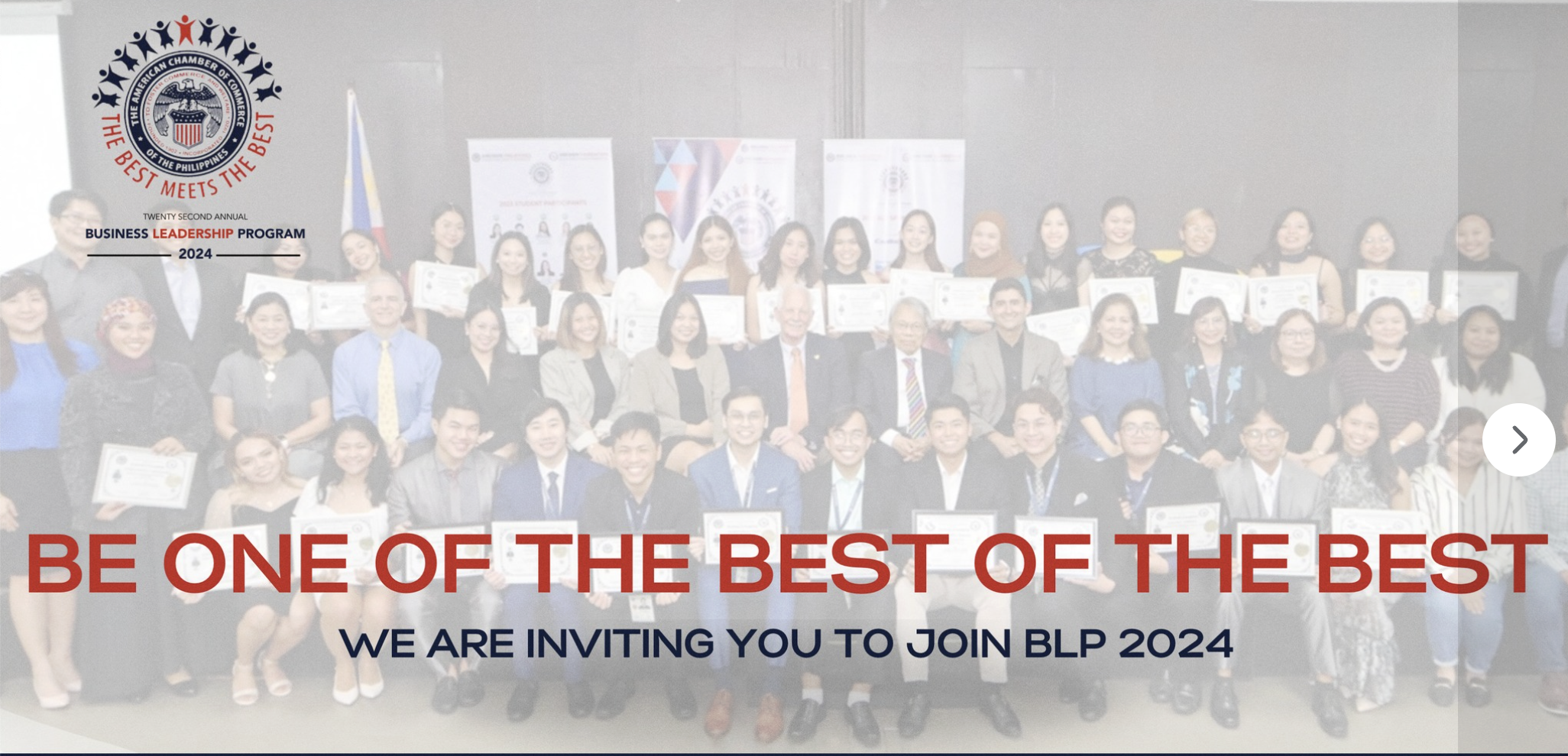
Promotes business leadership, economic collaboration, professional development, and cross-sector engagement between the Philippines and the international business community. Its Business Leadership Program was designed to identify and develop high-potential student leaders through competitive screening, executive-level exposure, and leadership-centered learning experiences grounded in real-world business environments.
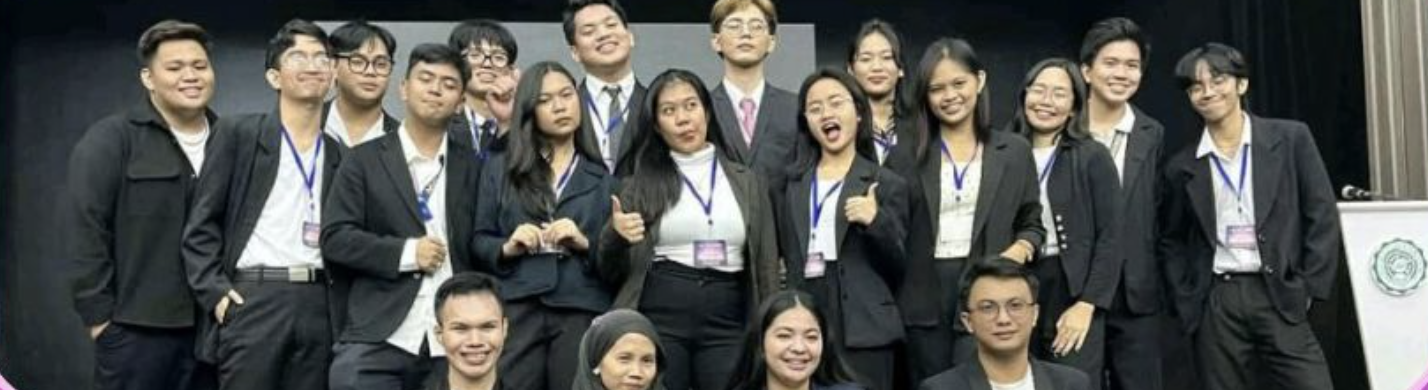
Being selected as part of the Top 50 Delegates was already a meaningful milestone in itself. The program gathered ambitious and highly capable students from different institutions, placing everyone in an environment that demanded leadership, critical thinking, professionalism, and the ability to communicate ideas with confidence and clarity. From the very beginning, the experience felt larger than competition alone; it felt like entering a space filled with individuals who genuinely wanted to grow, lead, and create impact beyond the classroom.
Throughout the selection process, delegates were exposed to leadership discussions, collaborative activities, and business-oriented challenges that pushed us to think beyond academics and into the realities of professional environments. Every interaction became a learning opportunity — whether through listening to experienced leaders, engaging with fellow delegates, or reflecting on the standards expected within high-level organizational spaces.
Although I was ultimately unable to advance into the Top 30 for the program proper, the experience became one of the most reflective and defining moments of my recent journey. It became one of those “what if” experiences that naturally stays with you — the kind that makes you wonder how far you could have gone if given one more opportunity. But beyond disappointment, the experience also gave me perspective. It reminded me that growth is not always measured by outcomes, but by the courage to enter competitive spaces, to be evaluated alongside exceptional individuals, and to continue showing up despite uncertainty.
More importantly, the program reinforced a mindset that failure and setbacks are not endpoints, but foundations for future growth. Not advancing became less about loss and more about motivation — motivation to strengthen my leadership, sharpen my capabilities, and return better prepared for the opportunities ahead. Sometimes the experiences that challenge us the most become the very experiences that quietly shape our resilience, humility, and long-term ambition.
While this chapter may not have ended the way I initially hoped, it strengthened something equally important: the determination to continue improving, continue learning, and eventually come back stronger.

Overall Experience
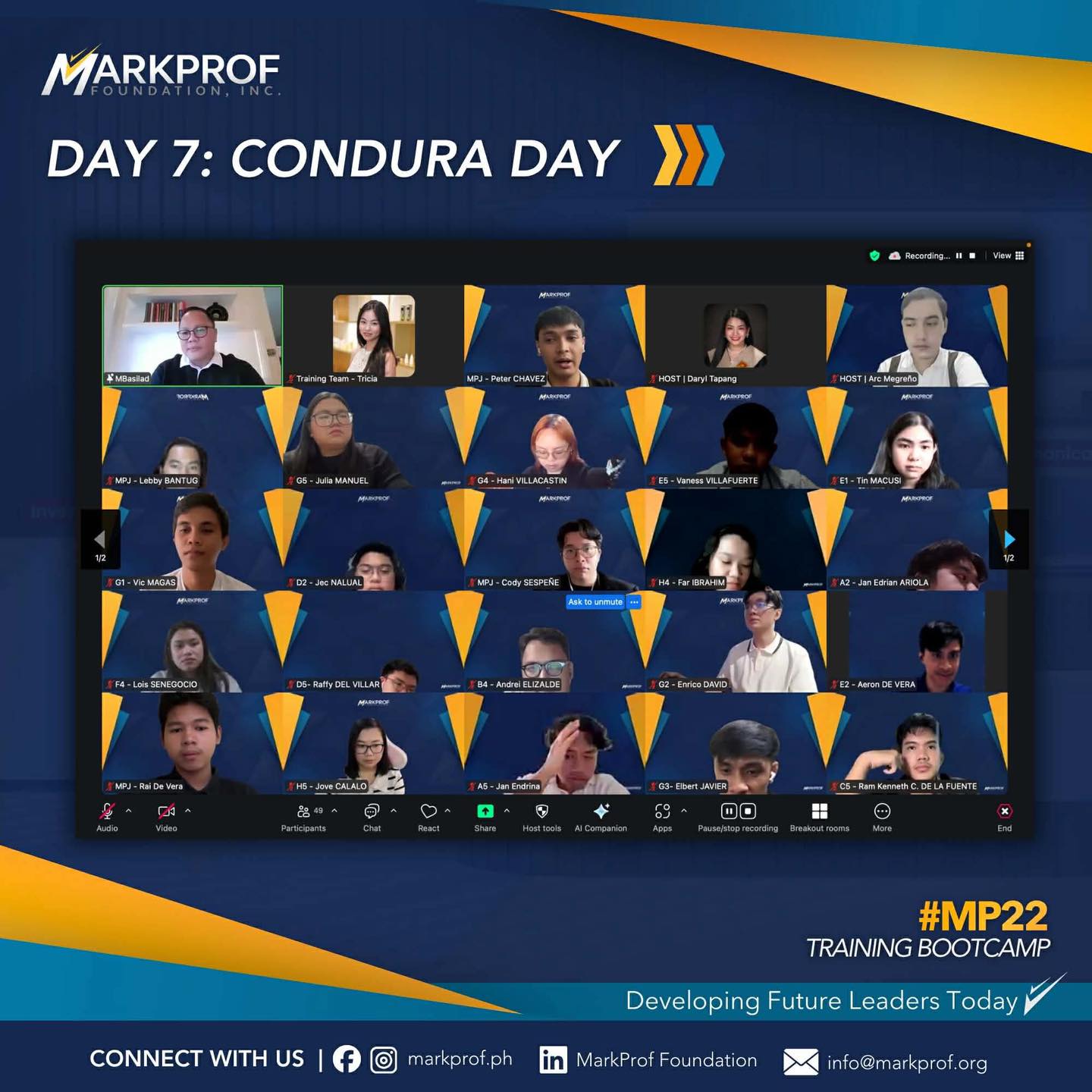
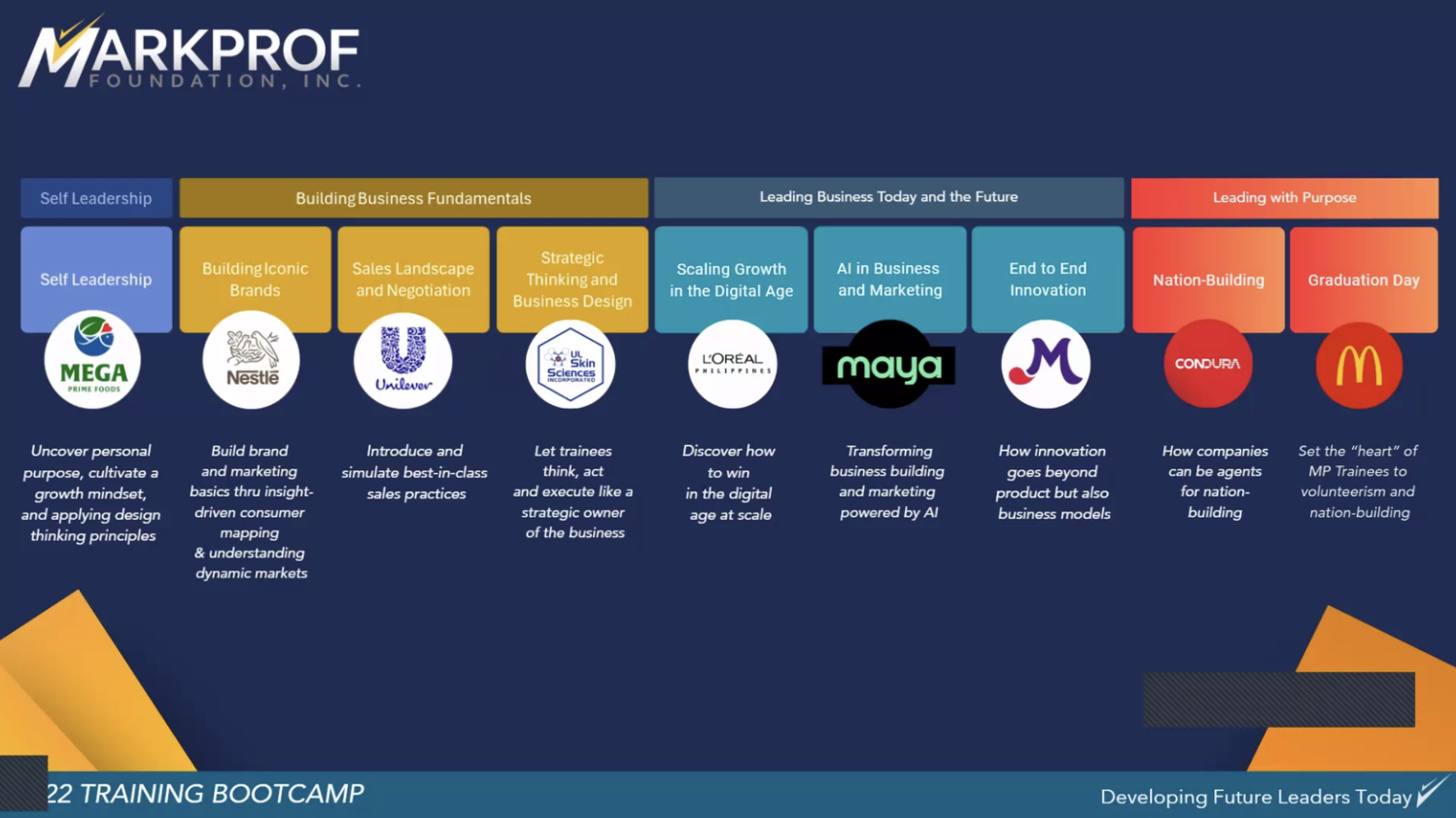
Marketing Professional Junior Bootcamp is an annual competitive, industry-driven marketing training program garnering thousands of applications nationwide, designed to develop high-potential student marketers through immersive real-world business challenges and performance-based learning led by elite industry practitioners. Built to mirror the pace and intensity of actual corporate marketing environments, the program required delegates to solve complex brand problems through strategic analysis, consumer insight development, campaign execution, and integrated marketing planning across multiple industries and market categories.
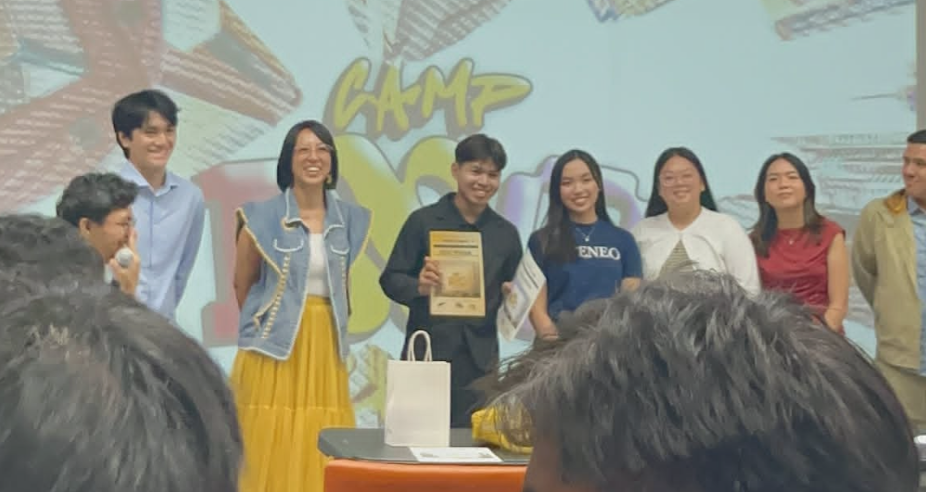
One of the most defining moments of the program was being recognized as the Best Team Campaign for Condura Appliances, where our team developed an integrated retention strategy focused on purchase acceleration, customer lifecycle engagement, and value-driven positioning. The experience reinforced the idea that impactful marketing is not simply about producing creative campaigns, but about deeply understanding people and translating those insights into meaningful business solutions.
The program further expanded my perspective through other high-pressure national case challenges. One of my works ranked 4th in the Nescafé CSR Campaign, developing a purpose-driven initiative integrating cause-related marketing, stakeholder alignment, and insight-led storytelling tailored for the Gen Z market. I also ranked 15th in the Belo Medical Case Campaign, where I developed a 360° integrated marketing strategy featuring audience segmentation, nationwide multi-channel activation, and women-focused consumer targeting.
By the end of the bootcamp, I finished as part of the Top 8 out of 28 Delegates, an achievement that represented more than competitive placement. It reflected the growth that comes from being placed in environments that continuously demand excellence, resilience, and execution at the highest level. The experience sharpened not only my professional readiness and business acumen, but also my confidence in leading through uncertainty, collaborating under pressure, and approaching marketing as both a strategic discipline and a deeply human craft.
OVERALL EXPERIENCE
A global leadership development initiative designed to cultivate high-potential students and young professionals through rigorous training in leadership, communication, critical thinking, and real-world problem-solving. Structured across international cohorts, the program brings together diverse participants from different academic and professional backgrounds to engage in case-based learning, leadership simulations, and reflective development exercises aimed at preparing future global leaders.
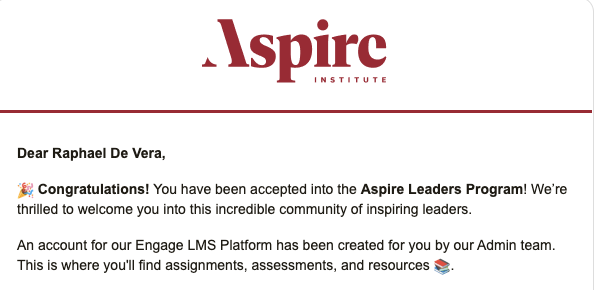
As a Cohort 5 Aspire Trainee, the experience centered on structured leadership development through guided modules, collaborative discussions, and applied learning tasks that challenged participants to think beyond academic frameworks and into real-world leadership dynamics. The program emphasized personal growth, adaptability, and strategic thinking, requiring consistent engagement in reflective exercises, scenario-based analysis, and peer collaboration within a globally diverse learning environment.
Throughout the program, trainees were exposed to leadership concepts rooted in decision-making, emotional intelligence, communication, and problem-solving under complexity. Each module pushed participants to examine not only how leaders think, but how they act under pressure, influence teams, and create meaningful impact within organizations and communities. The learning environment fostered continuous self-assessment, encouraging participants to refine their leadership identity and professional direction over time.
Beyond the structured curriculum, the program became a space for internal reflection and growth. Engaging with peers across different contexts highlighted the importance of perspective, humility, and adaptability in leadership. It reinforced the idea that effective leadership is not defined by titles or hierarchy, but by consistency, clarity of purpose, and the ability to lead oneself before leading others.
Overall, the Aspire Institute Leaders Program served as a formative experience that strengthened my leadership foundation through global exposure, structured learning, and reflective practice. It contributed to a deeper understanding of leadership as a continuous process of development—one that is shaped not only by achievement, but by learning, discipline, and the willingness to grow through every experience.
Overall Experience
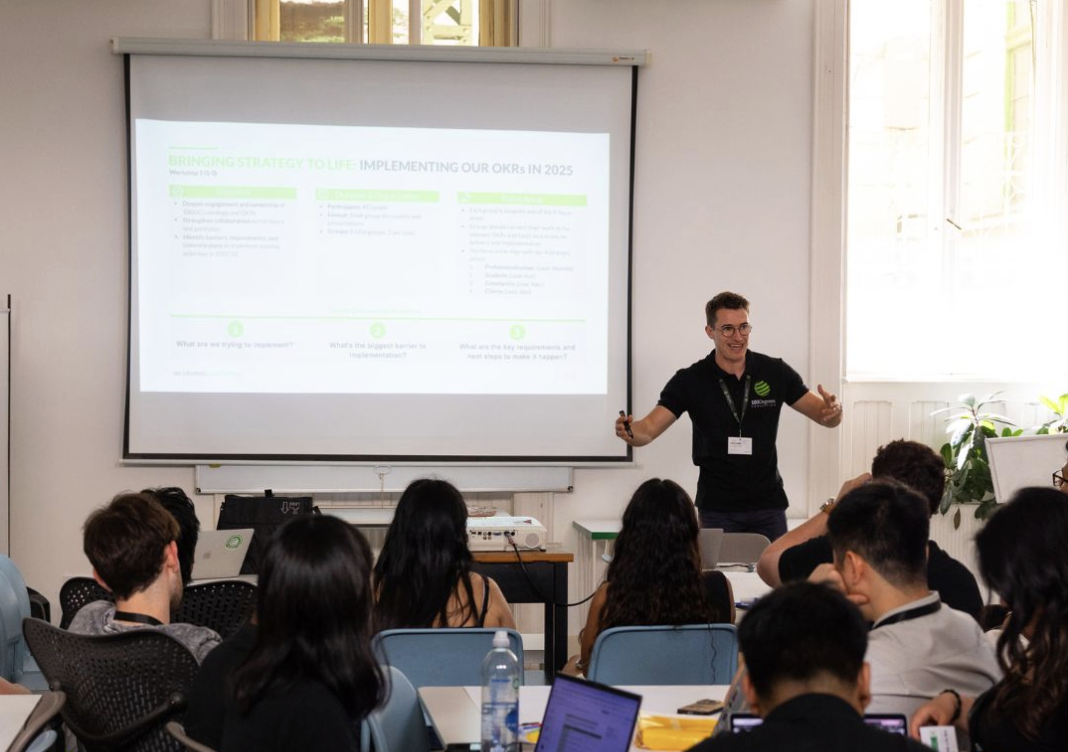
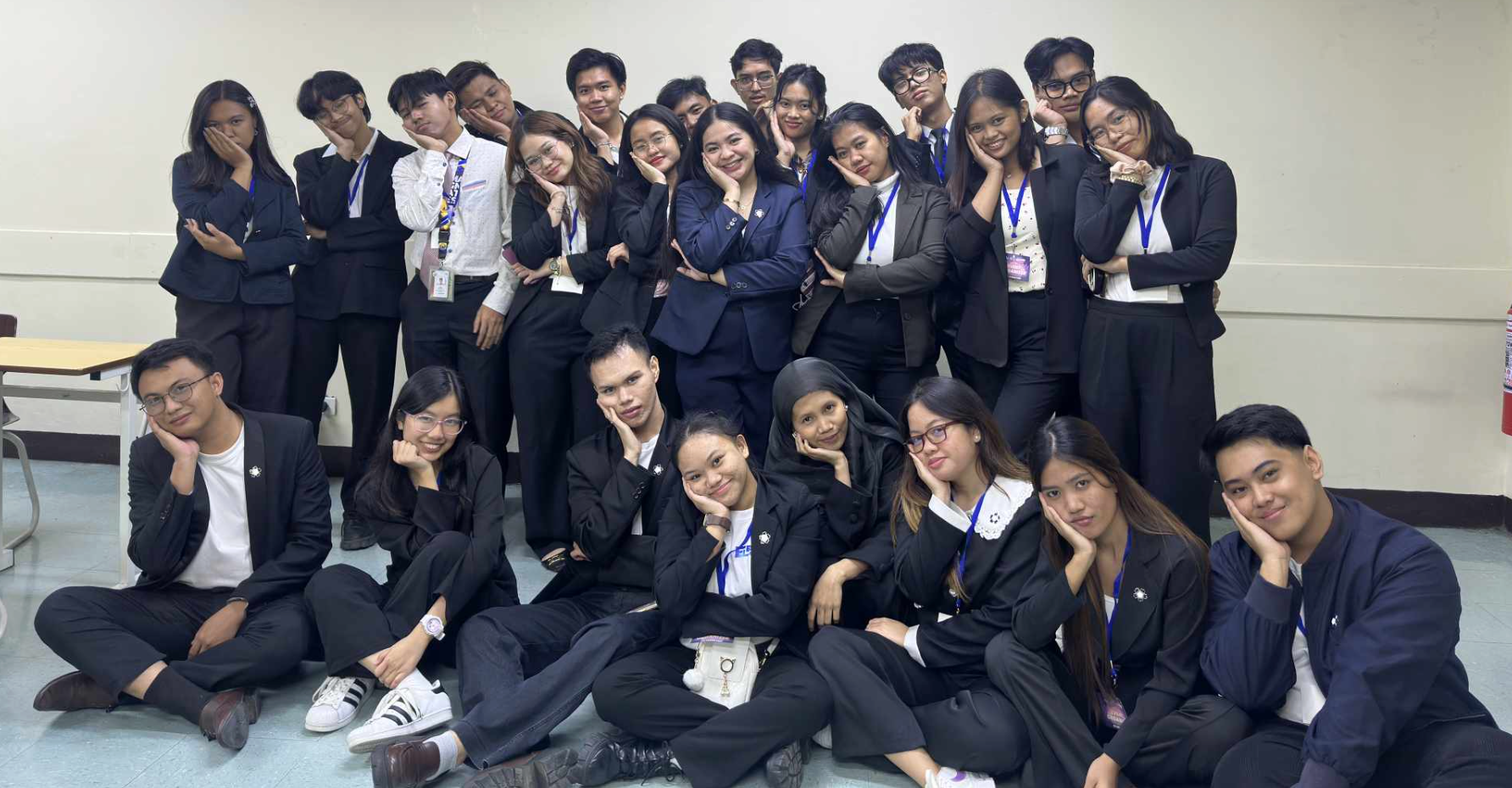
The program focuses more on nationalleadership and organizational training experience designed to develop future regional leaders through hands-on governance, operational immersion, and nationwide collaboration. Operating within one of the country’s largest student-led marketing organizations, the program exposed associates to the realities of large-scale organizational management, stakeholder coordination, and national-level execution across hundreds of partner universities in the Philippines.
Throughout the program, associates were trained through operational exposure involving project pitching, organizational planning, executive collaboration, and national event support. One of the most valuable aspects of the experience was learning how to transform ideas into executable initiatives — developing proposals, presenting strategies, and defending projects within fast-paced leadership discussions that demanded both clarity and adaptability.
The training also involved supporting major national events and initiatives under PJMA, where associates experienced the complexity of handling large-scale student engagement, inter-university coordination, and nationwide organizational operations. Behind every event was a deeper lesson on leadership: understanding how vision, systems, and people must work together to create impact at a national scale.
Beyond the technical exposure, the experience became deeply formative on a personal level. Working alongside leaders from different regions and universities challenged me to become more resilient, proactive, and solution-oriented. There were moments where communication had to bridge differences in perspective, where pressure demanded composure, and where leadership meant stepping forward even amidst uncertainty. Through these experiences, I developed not only stronger organizational and strategic capabilities, but also a deeper understanding of what it means to lead communities built on trust, collaboration, and shared purpose.
The Regional Director Training Program ultimately became more than a leadership position. It became an environment that strengthened my ability to operate within national-scale systems, contribute to meaningful organizational initiatives, and lead with both strategic direction and genuine human connection.
Overall Experience
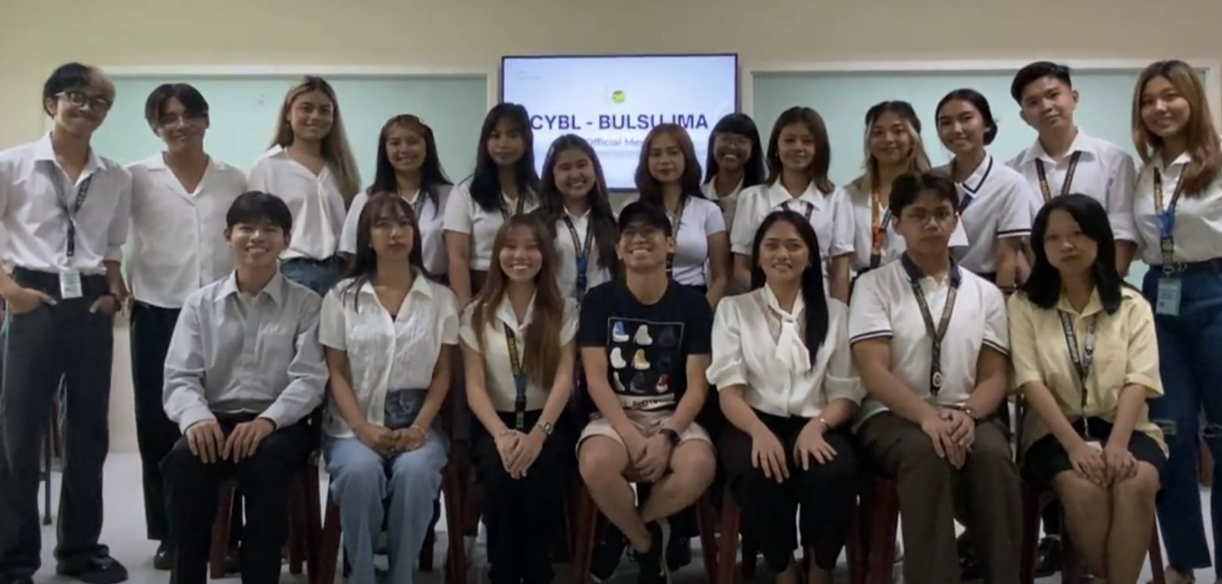
Provides a platform for developmental leadership initiative designed to prepare emerging student leaders through immersive organizational training, practical execution, and department-based specialization. Structured to simulate the dynamics of real organizational environments, the program focused on strengthening leadership capability, communication, collaboration, and strategic thinking through hands-on applications and performance-driven learning.
As the Lead Trainee for Marketing, the experience became an intensive introduction to the realities of organizational leadership and marketing partnerships. The role required lead generation for revenue diversification and organizational sustainability. Trainees within my department has to pitch to entrepreneurs for sponsorship and establishing continuous partnerships to sustain event initiatives.
Beyond marketing and operations, the Leadership Training Program became a formative experience that strengthened my understanding of service-oriented leadership and organizational excellence. It served as an early foundation for the leadership, communication, and strategic thinking skills that continue to shape my approach toward marketing, collaboration, and community-building today.
More Cases